

A new view of building health
Aethero Advanced Analytics’ UAS-based facility assessments capture everything from structural health to energy efficiency.
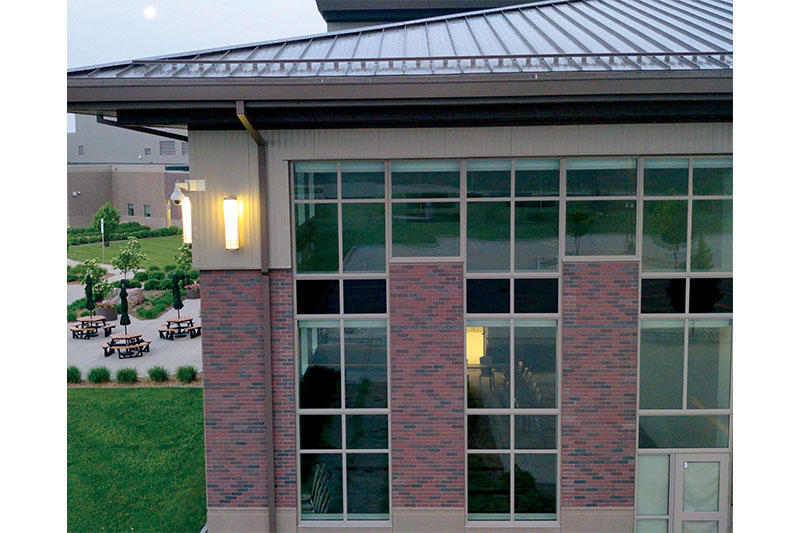
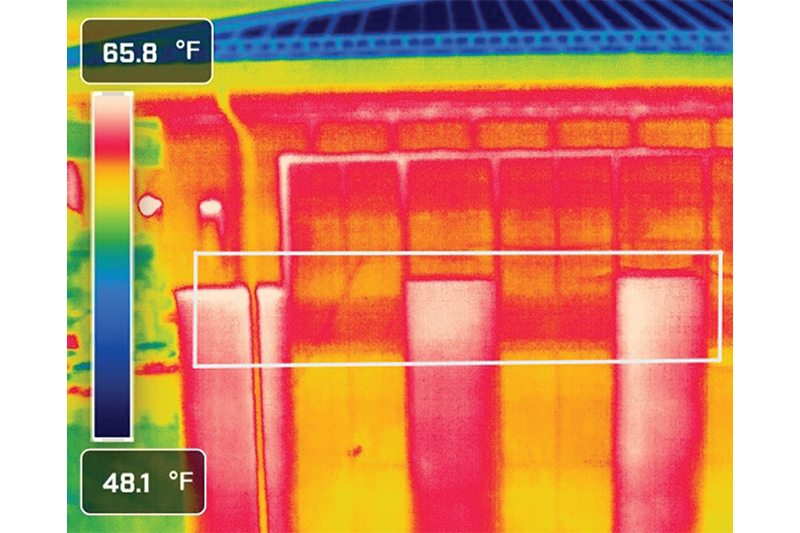
Before the sun began to peek over the east horizon, a data analyst and drone specialist walked the perimeter of Minnkota Power Cooperative’s facility in Grand Forks, North Dakota. This calm, early summer morning was chosen by Aethero Advanced Analytics for a reason. As they performed a full aerial scan of the co-op’s building, they needed to avoid heat buildup on the exterior that could hide any interior heat loss captured in their thermal imaging.
The mission was complex, but the goal was simple: collect all the data necessary to reveal structural or energy concerns before they become expensive problems.
As CEO and founder of Grand Forks-based Aethero, Dr. Matt Dunlevy assembled a team of fellow University of North Dakota engineering graduates in 2021 to develop an offering that harnesses what the state does best to fix a universal pain point.
“It really started with the intersection of aviation and energy. There was a practical problem. Buildings often waste a lot of energy, and human beings spend 90% of their time in buildings,” Dunlevy said. “That’s not just why it started, but also why we like to talk to energy companies such as Minnkota. We have a North Dakota-aligned industry, which is UAS, collaborating with another sector that North Dakota knows very well, which is energy.”
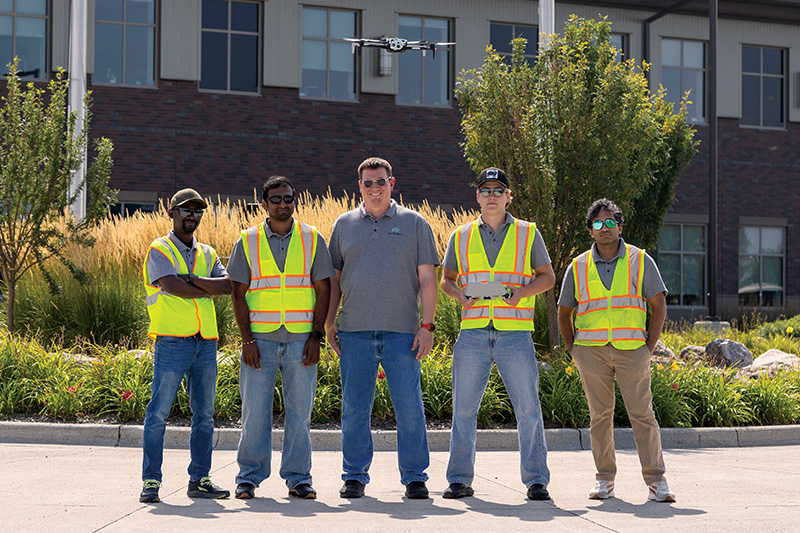
This year, Aethero contacted Minnkota about the potential of running a building health assessment on the co-op’s Grand Forks headquarters, which would provide 3D thermal imaging and high-resolution photography of the facilities, along with deep, AI-driven analysis to put all the data into long-term perspective.
“I wanted to make sure our product was in front of the experts here for the validation and feedback. I saw it as a natural partnership,” Dunlevy said. “It’s one of the most iconic structures in Grand Forks and one of the most beautiful in the state. Of course, we wanted that in the portfolio.”
An energy benchmark
Minnkota’s board of directors approved the construction of a new headquarters more than a decade ago, a move that would transition the Grand Forks workforce from a 70-year-old building into a space of heightened efficiency, modernity and security.
“When the headquarters was built in 2017, it was about investing in the future of our whole cooperative system and the members who own us,” said Jami Hovet, Minnkota Executive Vice President and Chief Administrative Officer. “We wanted a facility that could support our employees and the members for any changing needs that could emerge in the decades ahead. Working with Aethero is just another way to maintain that investment.”
Within three weeks of meeting with Minnkota and sketching out the project scope, Aethero arrived on-site with a Skydio X10 drone. It took approximately seven hours of orbits to collect data on every corner and crevice of the facility’s roof, windows and facade.
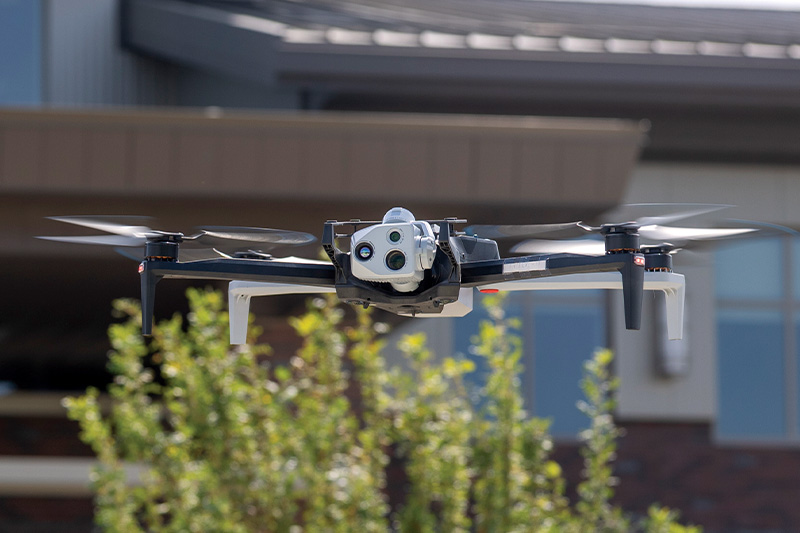
Once the data was gathered and backed up, Aethero’s analysts got to work. Every image was GPS-aligned to create a 3D model of Minnkota’s headquarters. Any visual concerns, such as cracks or rust spots, were annotated for further review. On the energy side, Aethero uses its own proprietary thermodynamics equations to extract how the outside materials are performing against commercial building standards and where there may be energy waste.
“What comes out of this is a complete picture on the outside of your building – what work may be needed now in the next one to two years, or what may be needed in five to 10 years,” explained Aethero’s Dr. Karthik Balaji, Senior Director of Technology and Product Development. “This helps the facility manager and those running the buildings to have an idea of the facade-related capital expenditures which are coming, and they have time to budget for that.”
Everything Aethero collects is loaded into TELOS, a proprietary platform that makes the data understandable and pliable to the needs of the customer. In Minnkota’s case, the TELOS dashboard laid out the top 10 energy efficiency and structural items that could offer the best return on investment (ROI) if updated. However, those 10 items are just a subset of potential areas for improvement.
“Their analysis found areas where you could see there was some thermal penetration from the inside out,” said Minnkota Buildings and Grounds Supervisor Justin Swanson. “Those are areas that we can explore now and find the best fix for each area.”
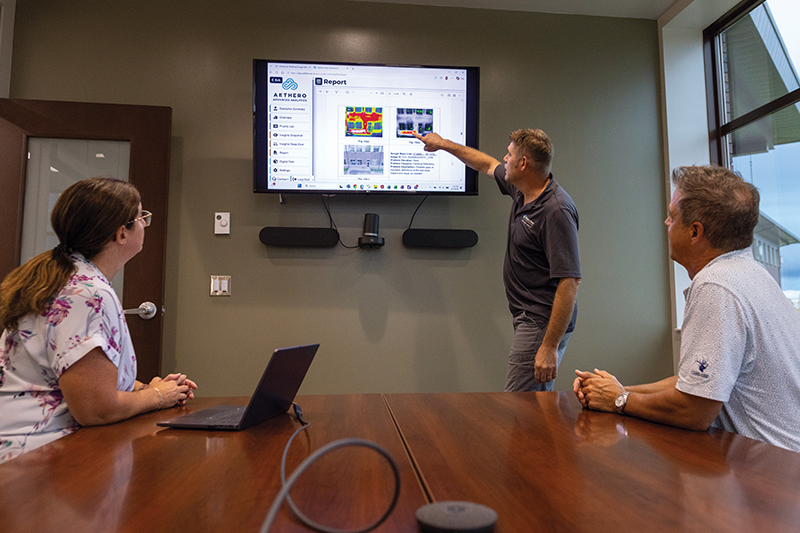
Facilities Manager Dave Whalen added that TELOS breaks all findings into categories and offers user-friendly filters to compare and evaluate projects and their ROIs. “They also give you a pi¬ture of each individual concern and a GPS location on the map where exactly on the building are they looking,” he said. “If it’s just a little picture of a crack, you know exactly where it is.”
The building analysis will help Minnkota satisfy its insurance inspection commitments for this year, but Hovet doesn’t expect this to be a one-and-done partnership. She and her team will meet with Aethero again to dive deeper into the flight’s findings and offer feedback for the future. The initial assessment has delivered a baseline view of a young, healthy facility, and leaders will re-engage with Aethero in the years ahead to fly comparative scans.
“Having this technology, something as new and upcoming as the UAS analysis that Aethero offers, is a benefit for us, especially having them right in our backyard in Grand Forks,” Hovet said.
North Dakota ecosystem
The origins of Aethero hark back to 2016, when the North Dakota University System allowed Dunlevy to fly all 11 state colleges and universities. He collected millions of thermal images of the campuses, then partnered with the University of North Dakota’s College of Engineering and Mines to make that data collection go further. And it did. Dunlevy began building his team, integrating artificial intelligence and developing new patents for analysis software.
“We fly drones and this is a drone state, but at the end of the day, Aethero is not a drone company. We’re a data company,” he said. “AI is extremely important. It was the thing I could see was needed to really change the business model.”
Dunlevy says he sees AI as a “force multiplier” for the already crystallized ecosystem of UAS companies that have found a home in North Dakota. Just as UAS development was spurred from strong aviation and higher education sectors in the region, AI will be the next step in the state’s innovation evolution.
“North Dakota has every piece of the jigsaw puzzle, and in many cases, we have the best of the pieces,” he said. “That’s why we’re so best of breed in our state when it comes to UAS. And AI is just amplifying all of that.”
Learn more about Aethero Advanced Analytics at aethero.ai.
...
5301 32nd Avenue South
Grand Forks, ND 58201
P: 701-795-4000
