

Joining forces to power national security
A partnership between Grand Forks Air Force Base and Nodak Electric Cooperative is strengthening electricity reliability and mission preparedness.
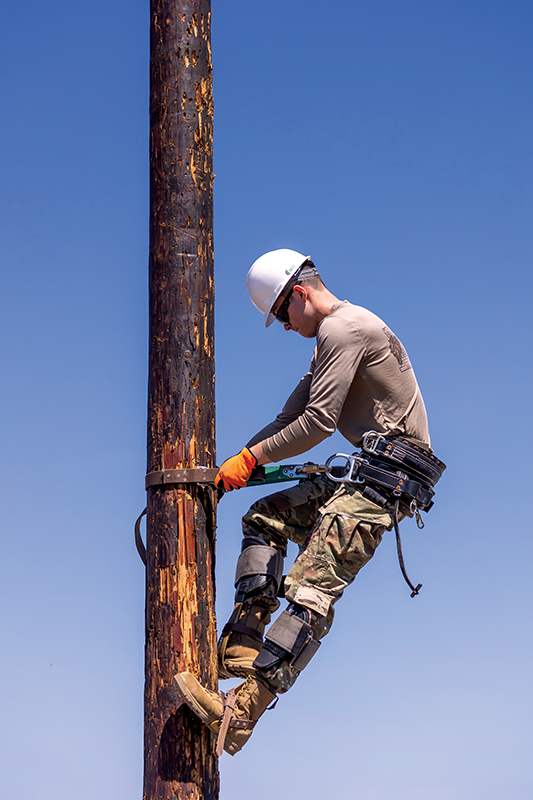
A small squad of Nodak Electric Cooperative lineworkers squinted up at a young Grand Forks Air Force Base (GFAFB) airman climbing his way to the top of a power pole. Above the airman’s head hung a 120-pound mannequin, dead weight in need of rescue. On the ground below, seven more service members waited their turn to strap climbing spikes to their boots and make the heroic ascent.
This pole-top rescue training day was coordinated by Nodak Assistant Line Superintendent and Safety Coordinator Derek Sondreal. Like many of the co-op’s training sessions, it wasn’t just for Nodak employees. It was another learning opportunity for the electricity partners serving our country.
“They're really not afraid to try anything,” Sondreal said of the fatigue-clad Air Force technicians nearby. “You know, that's a big thing – any task you give them, they attempt it.”
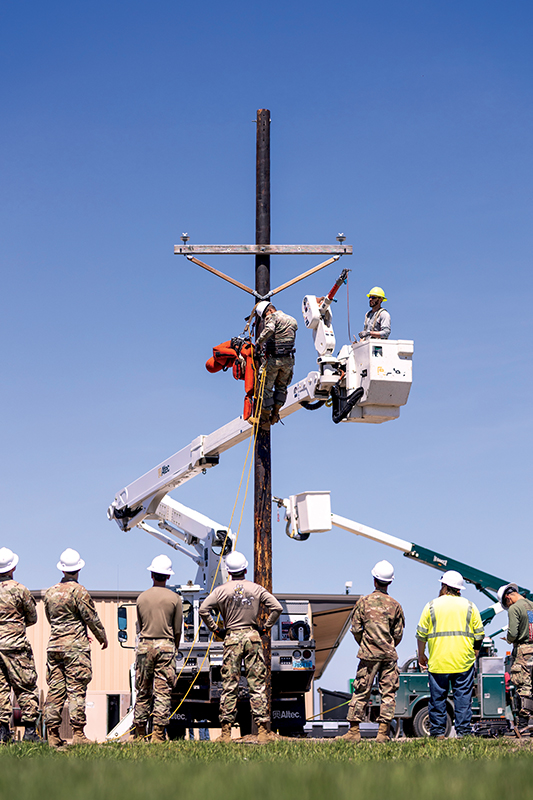
Sondreal has been leading high-voltage training with these airmen for over a year as part of a partnership formed in 2018 between Nodak and GFAFB. At that time, the entities signed a utilities privatization (UP) agreement, through which Nodak became the system owner of the electric infrastructure of the installation. Under the agreement, the cooperative is responsible for maintenance and repair, reliability projects and outage response. The collaboration also extends to safety and high-voltage training with Air Force electricians, so they can both serve their base and any sites they may visit during deployment.
Contract for reliability
According to Melissa Cassanelli, the installation’s energy manager and UP Contracting Officer’s Representative, around two decades ago the U.S. Army and Air Force began to experience challenges with receiving the necessary funding to reinvest in base utilities, such as electrical, water and wastewater. Since much of the infrastructure had been built out in the 1940s and 1950s, systems were beginning to fail and were no longer meeting code.
“Across the board, we had a lot of issues with electricity being reliable,” Cassanelli said. “A lot of places, in the south especially, with their storms and heat, were really struggling.”
Since GFAFB possessed one of the older systems in the nation, it was chosen by the federal government as one of the top priorities to privatize with a local utility. The UP process took around 10 years and was finalized in 2018. Nodak immediately invested in bringing the system back to the level of dependability that was needed on the base.
“We have very reliable power infrastructure now,” said GFAFB Electrical Foreman Mark Lawrence. “With all our deployments and military training and everything these airmen do, we don't quite have the manpower to focus on maintaining the exterior power of the base. That's one part of the mission that won't fail, because we have Nodak out here to maintain this infrastructure.”
“The partnership with Nodak and their timeliness to respond, whether it's a new transformer coming in for a mission or anything else, it’s exceeded anything I think we would have the capability to do in house,” said Chief Master Sgt. Michael Benoit, who serves as director of operations for the 319th Civil Engineer Squadron. “The cooperation is one some the best I’ve seen out of 10 installations I’ve experienced.”
Electric reliability is important to the housing, daycares, clinics and other amenities of the base. But it’s utterly critical for the missions of the installation, which include a drone mission and High Frequency Global Communications System mission, both of which rely heavily on uninterrupted power. “We do have backup generators, but those facilities need power, and Nodak knows that,” Cassanelli said. “They've done a lot of upgrades to those systems to make sure those facilities are always online.”
The establishment of the UP contract took what was already a strong working relationship between Nodak and GFAFB and formalized it into something with a value greater than the sum of its parts.
“From our perspective, it allows us to better understand the mission-critical needs of Grand Forks Air Force Base and ensure our system is aligned to support those needs,” said Nodak CEO Mylo Einarson. “At the same time, it’s opened the door for more collaboration on training and preparedness, which ultimately strengthens reliability and resilience for the base.”
Partners in training
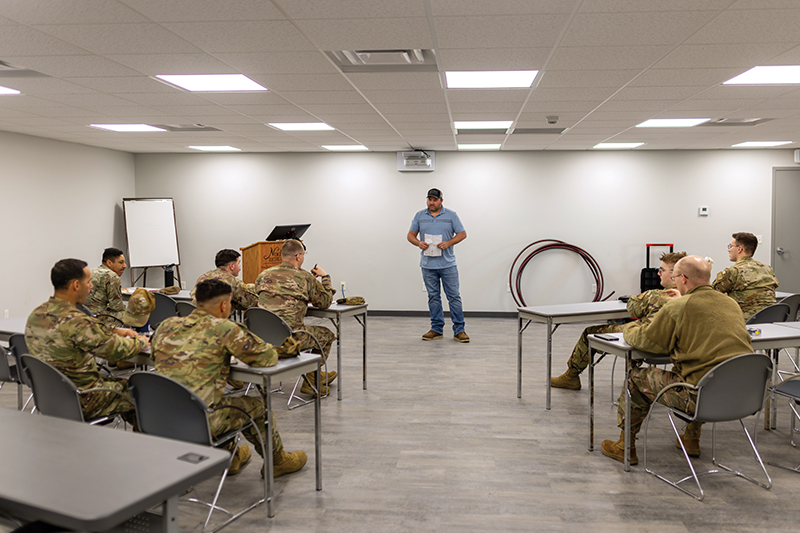
As part of their training, Air Force electrical technicians go through six months of coursework to prepare them for all levels of electrical maintenance, from interior wiring to transformer repair. Only a few weeks of that training is focused on high-voltage infrastructure. That’s where the Nodak team steps in, building hands-on training experiences for the airmen to maintain their knowledge of the equipment.
“They can learn the intricacies of the system so they’re prepared for when, heaven forbid, the day came when they’re the person that people have to rely on,” said Tech. Sgt. Brian Polk, who serves as electrical section chief. “We in the military have a very strong belief that we train how we fight. So, it makes us more comfortable knowing, hey, I know how this exact piece works because they've shown me before.”
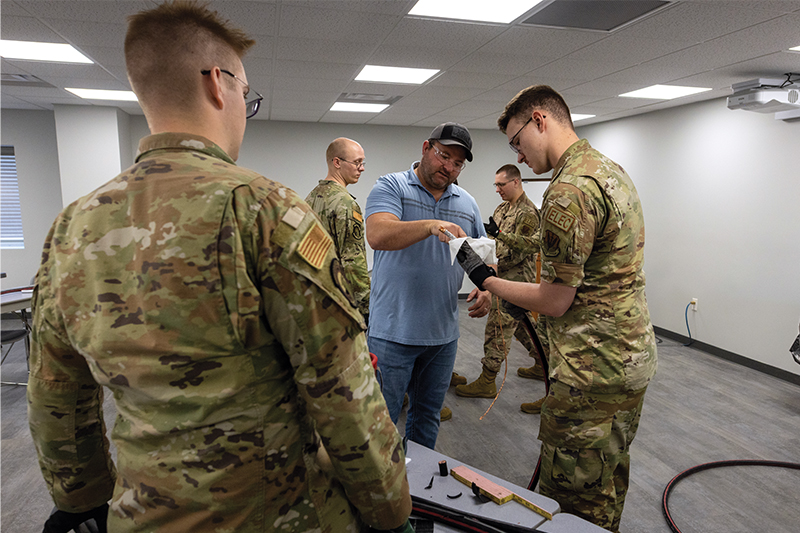
Polk explained that the training relationship with Nodak also helps the airmen meet the qualifications for their Career Field Education and Training Plan (CFETP). Nodak is able integrate the requirements of the CFETP into monthly training exercises to ensure the electricians are getting exactly what they need.
Just weeks before pole-top rescue training, Sondreal joined the small crew of Air Force electricians at the Nodak service center on the base. He guided them through cutting and terminating underground primary cable, answering questions as they moved through each step of the process.
It’s not a role he expected when he became a lineworker 17 years ago. But it’s become a routine he can be proud of.
“It’s rewarding to know that you're helping make a difference,” Sondreal said. “I mean, they're making a difference for us, so it's one way to pay it back to them.”
...
5301 32nd Avenue South
Grand Forks, ND 58201
P: 701-795-4000
