

Powering the front line of the Cold War
A preserved North Dakota missile site offers a look back at American history – and Minnkota history.
The elevator groans before it moves.
Then, with a slow mechanical rumble, it begins its descent into the earth.
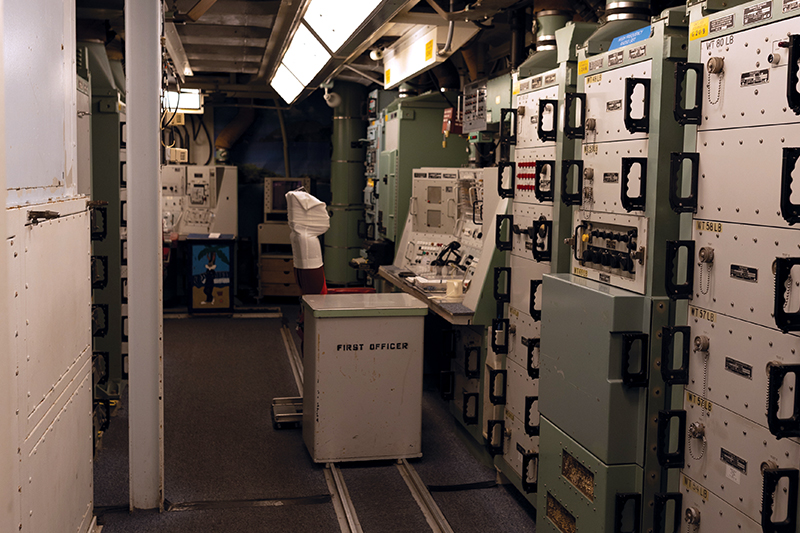
Fifty feet below the North Dakota prairie, the Oscar Zero Launch Control Center feels frozen in time. Behind steel blast doors and thick concrete walls, two Air Force officers once stood watch around the clock during the height of the Cold War, prepared to carry out orders they hoped would never come.
“It was hours of boredom punctuated by seconds of terror,” said Rob Branting, supervisor of the Ronald Reagan Minuteman Missile State Historic Site near Cooperstown, North Dakota.
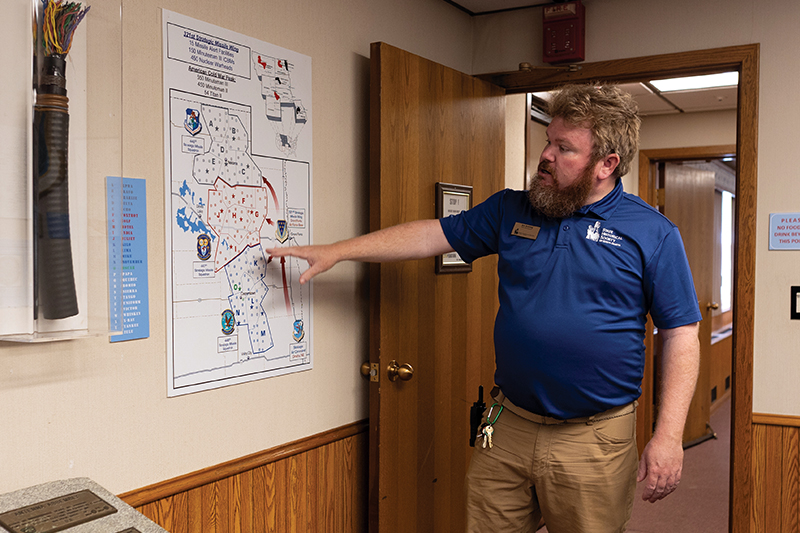
Fortunately, the true terror never came. Instead, what remains is one of the most remarkably preserved snapshots of Cold War America anywhere in the country.
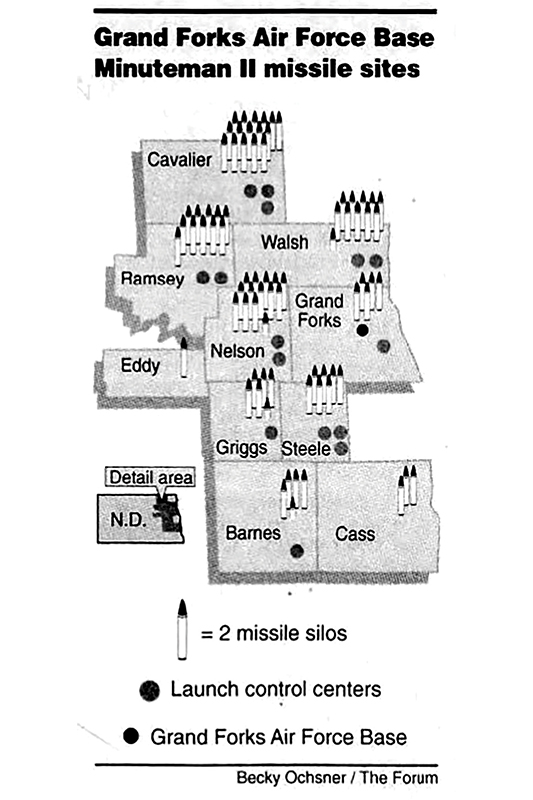
For more than three decades, from the mid-1960s until deactivation in the late 1990s, North Dakota was home to one of America’s most important nuclear defense networks. Spread across eastern North Dakota were 150 Minuteman missile silos and 15 launch control facilities connected by hundreds of miles of hardened communications cable buried beneath farmland. The missile fields reported to Grand Forks Air Force Base as part of the nation’s nuclear deterrence strategy.
“Peace is our profession,” Branting said, recalling the motto of the U.S. Strategic Air Command. “It’s kind of a strange model when you’re in charge of thousands of nuclear weapons. But the whole idea was to provide nuclear deterrence and hopefully prevent a war.”
Life inside the bunker
For all the technology and geopolitical significance, daily life at the missile sites could be surprisingly ordinary.
Walking through the top-level of the facility feels less like visiting a museum and more like stepping into the 1990s. The bedrooms remain largely unchanged. Magazines and handwritten notes still rest on tables. Ashtrays sit where they were left decades ago. Everywhere you look, small details create the feeling that Air Force personnel simply left for a moment and never returned.
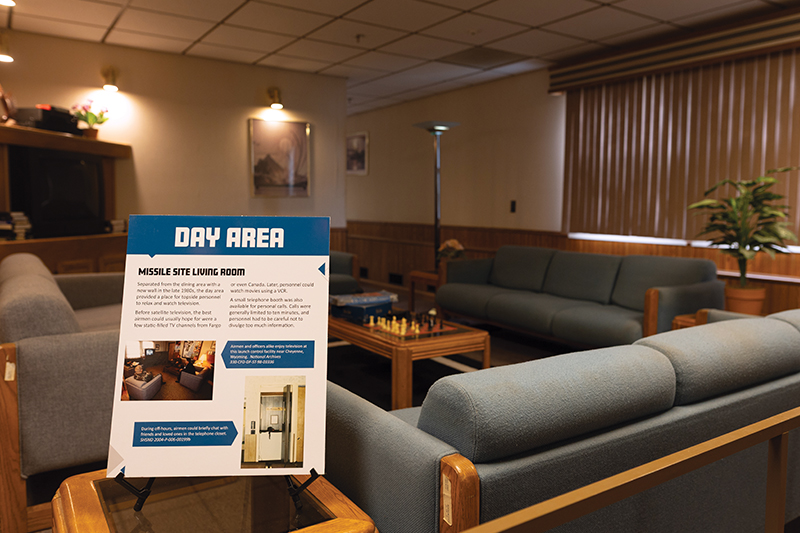
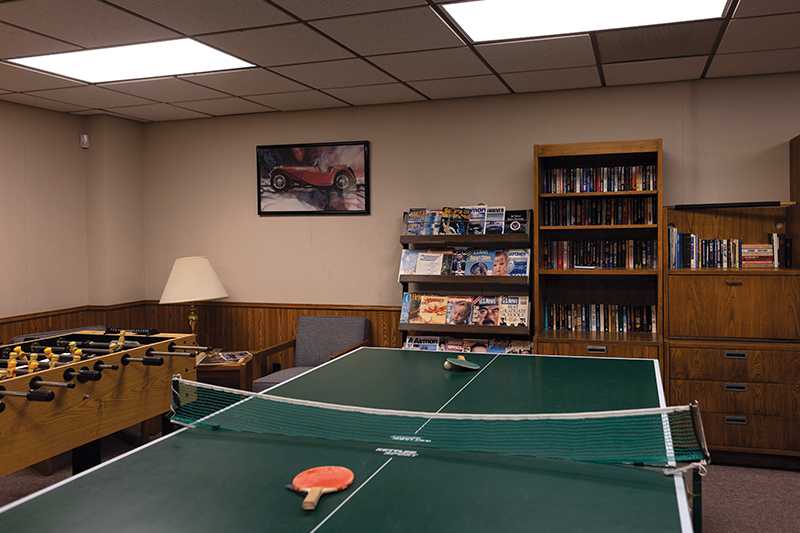
“We tried to keep everything as it was in 1997,” Branting said. “People obviously want to go see the missile bunker, but we also want to show how the technicians, cooks and guards lived.”
If launch orders ever came, the officers in the underground capsule would have only moments to verify the commands and carry them out. Fortunately, no launch orders were ever issued from North Dakota’s Minuteman sites and the missiles remained silent through decades of Cold War tension.
Massive buildout for Minnkota co-ops
As the Air Force raced to construct the Minuteman system in the mid-1960s, Minnkota and its North Dakota member distribution cooperatives found themselves supporting one of the largest infrastructure projects in state history at the time.
Approximately 5,000 workers poured into the region to build the missile network. Minnkota and its members ultimately provided electric service to 144 of the state’s Minuteman facilities. Doing so required an extensive substation construction program and significant expansion of the rural electric distribution system.
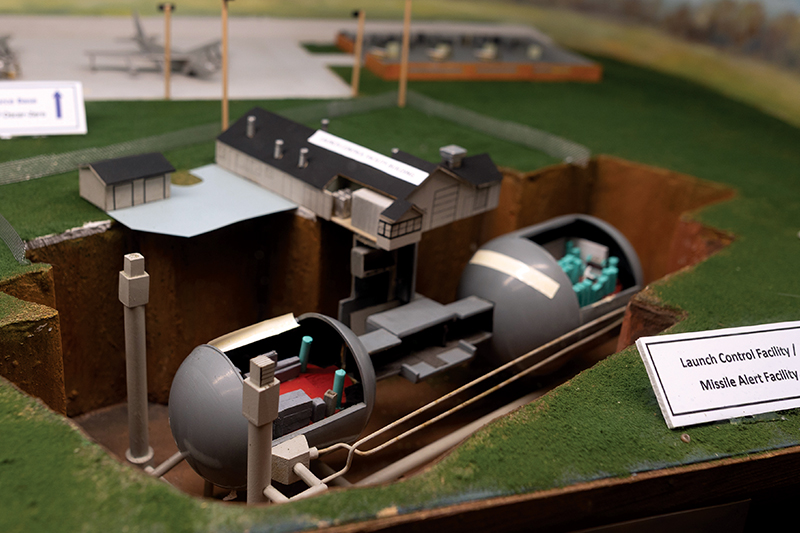
The impact on Minnkota was immediate. Energy sales increased 14.3% in 1965 and another 18.3% in 1966. By 1968, approximately one-quarter of Minnkota’s energy sales were tied to national defense facilities.
“Keeping reliable electricity to these sites was critical to national defense,” Branting said. “The Air Force couldn’t have succeeded without that.”
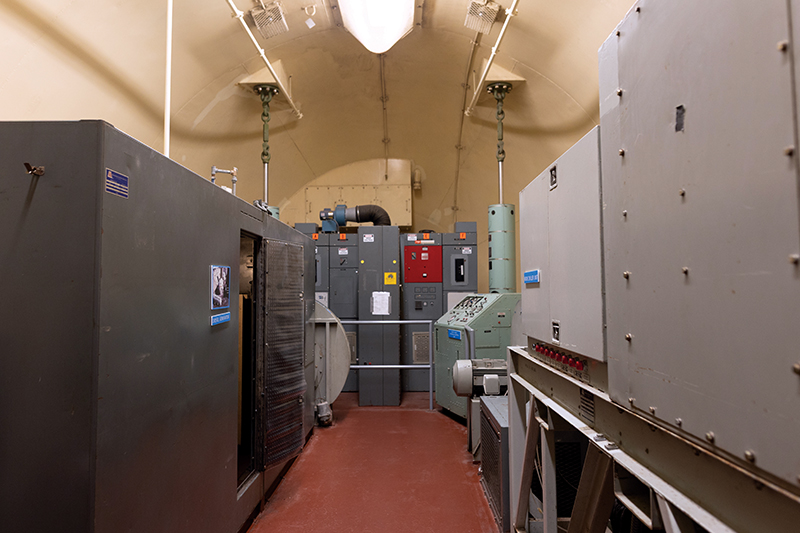
The launch control facilities were designed with multiple layers of redundancy. Cooperative power supplied the sites under normal conditions, while diesel generators stood ready if the grid failed. Branting said the facilities carried enough fuel to continue operating for up to six weeks.
“If we were under attack, the hope was you’d get the generators kicked on so they could launch the missiles if necessary,” Branting said. “That was a big thing to advertise to the Soviet Union – that these missiles could still work if we lost the grid.”
The rapid growth arrived at a pivotal moment for Minnkota. As demand surged across the region, the cooperative was evaluating the largest power supply decision in its history: construction of a coal-based generating station in western North Dakota. In 1966, Minnkota received financing for what would eventually become the Milton R. Young Station, helping position the cooperative to meet the growing energy needs of its members and the region for decades to come.
Preserving a legacy
The Ronald Reagan Minuteman Missile State Historic Site welcomes approximately 4,000 visitors each year. The site continues to grow as a destination for history enthusiasts. In 2025, it added an HH-1H “Huey” helicopter – one of only 30 ever built. The aircraft supported missile field operations across the Northern Plains and serves as another reminder of the scale of the nation’s Cold War defense effort.
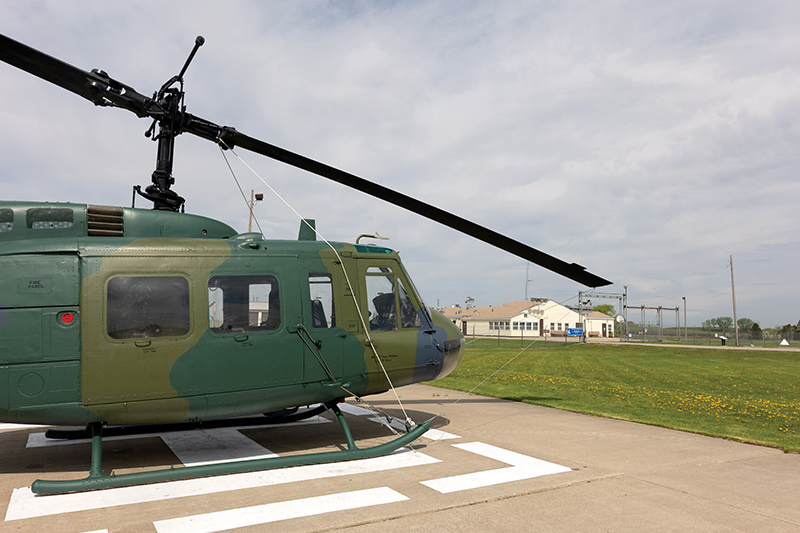
For Branting, who has overseen the site for nearly a decade, preserving the facility is about more than just showcasing military equipment.
“This facility is a part of North Dakota’s legacy of protecting the United States,” he said. “It demonstrates the first time when nuclear war could be moments away. It’s an important period of history to remember.”
The Ronald Reagan Minuteman Missile State Historic Site is available for tours from Memorial Weekend through Labor Day daily from 9 a.m. to 5 p.m., and by appointment during the winter months.
...

5301 32nd Avenue South
Grand Forks, ND 58201
P: 701-795-4000
