

Planting roots in North Dakota
Agristo has broken ground on a new Grand Forks, North Dakota, potato facility that aims to sprout economic growth.
Every potato farmer will tell you that growing spuds – and doing it well – is a blend of art, science and business. In Thompson, North Dakota, Mike Loyland has been balancing those variables for decades in the Red River Valley, on soil that’s been turned and re-turned by his family for five generations.
From the look of the early days of July, 2026 was shaping up to be a good potato year. For a bushel of reasons.
“This is exciting,” Loyland said, shaking dirt from a freshly pulled Musica potato plant now halfway through its summer growth cycle. Tiny tubers stemming from a large seed potato had begun to form into small, yellow duplicates. “This is a really good set. Lots of stems.”
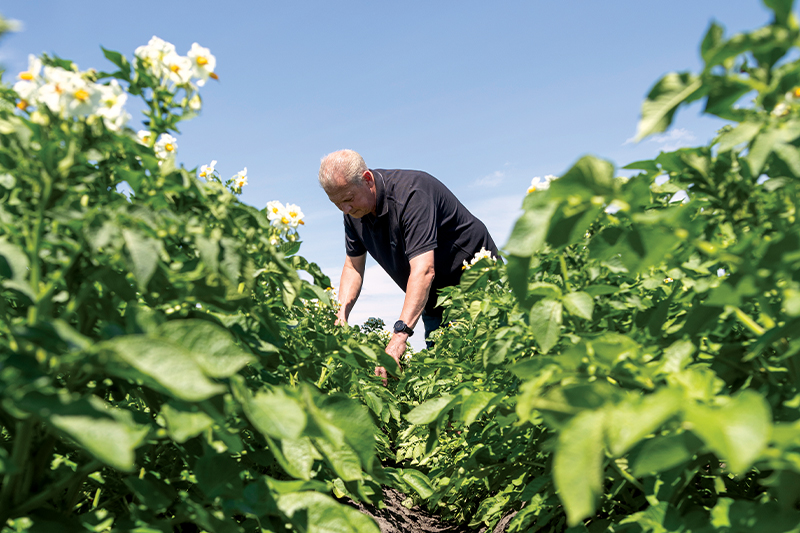
This healthy plot of table potatoes is one of 700 acres of different varieties that Loyland farms, with additional acreage dedicated to sugar beets, edible beans, soybeans and wheat. But potatoes are where a new opportunity has recently taken root for the Thompson farmer and more than 50 other potato growers in the region.
By the fall of 2029, they’ll be harvesting potatoes for Agristo, a Belgium-based potato processor that has committed an investment of more than $1 billion in a state-of-the-art processing facility in Grand Forks, North Dakota. The development will not only have an enormous economic impact on Grand Forks and its surrounding communities, but it could also prove to be a gamechanger for the farm families who have become early contracted partners to supply the facility with potatoes.
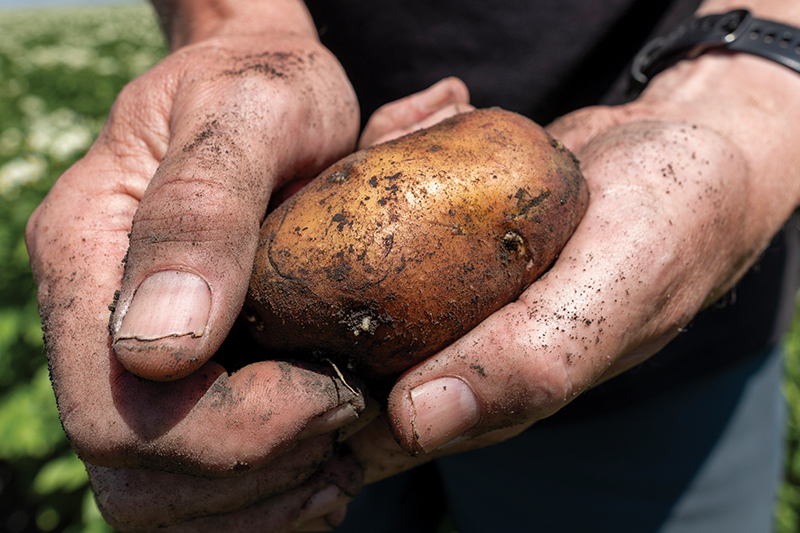
“We work in the fresh market, which is very volatile. Processing contracts have more stability. There’s maybe less upside potential, but that consistency is probably worth more in the end,” Loyland said. “That stability brings a lot to us.”
Loyland further explained that before Agristo, there wasn’t an opportunity for a local farmer to raise potatoes for a processor without irrigation. “Agristo opened up that dry land opportunity, so that's going make a big difference.”
Good spot for tots
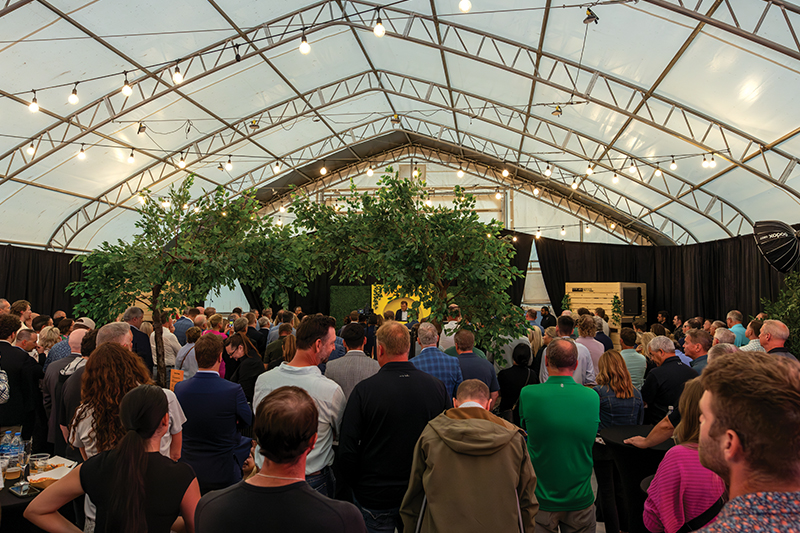
Just two days earlier on July 7, Loyland stood in a crowd of more than 300 people gathered at the site of the future Agristo facility for a celebratory groundbreaking ceremony. Attendees huddled under an event tent filled with facility renderings, video screens and a buffet of Agristo potato products, from fries to tater tots. The dreary, drizzly air outside had no chance of dampening the warm spirit of achievement and partnership under the white canvas.
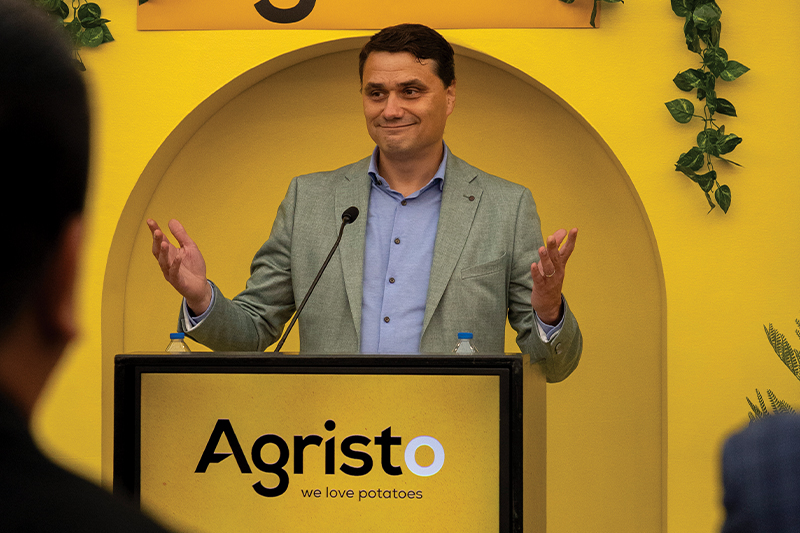
“It is great weather, I would say,” said Agristo CEO Filip Wallays, welcoming guests with a cheery Belgian cadence. “I mean, we are here with a lot of farmers. This is true potato weather, so it's fantastic.”
Wallays recalled when his family-owned business (with additional sites in The Netherlands, India and France) began to look for expansion opportunities across the Atlantic in 2020. Agristo sent experts to different regions in the U.S. and Canada, searching for a perfect ecosystem of good soil, good climate, good economics and good people. At one point, Wallays received a call from one of his scouters, who had struck gold in North Dakota.
“[He said,] ‘You should just see it with your own eyes because it's difficult to believe,’” he remembers the Agristo representative telling him. “And that's what we did.”
Soon after, the Agristo team started meeting face-to-face with area potato farmers to learn more about their crops and gauge their interest in partnerships. They began to make connections with local leaders, suppliers, government officials, economic developers and other stakeholders to ensure Grand Forks was the right place to grow.
It was the right place.
“We're keenly aware that North Dakota is in competition with other states for projects like Agristo, and we are deeply grateful that they chose to invest in our great state,” North Dakota Lt. Gov. Michelle Strinden said from the podium. “Agristo truly is a win-win-win for our potato growers, the city of Grand Forks, the Red River Valley and the entire state of North Dakota.”
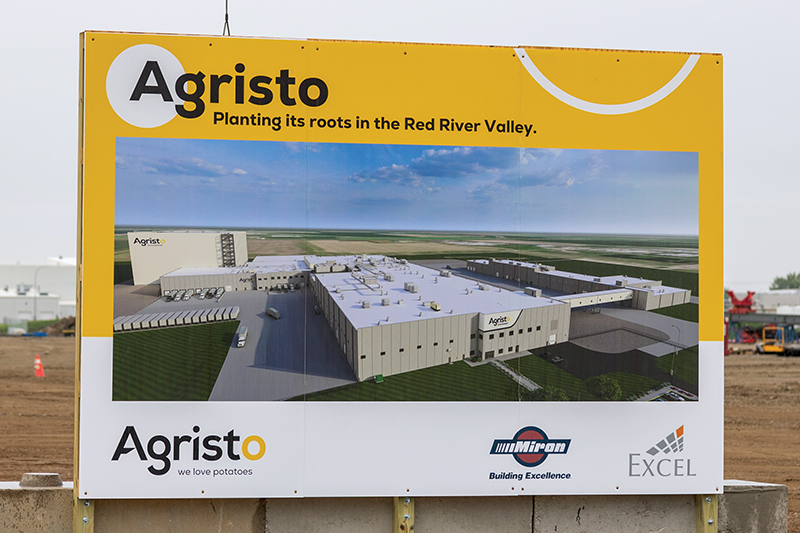
North Dakota Agriculture Commissioner Doug Goehring followed, touting the innovation and grit of the region’s farmers, whose common sense and applied research have driven the industry forward. “You're bringing a lot of value to our communities, but we're going to give you an awful lot of value back,” he told Agristo leadership at the event. “I think we share a lot of the same common goals and a commitment to the true purpose of bettering people's lives.”
Grand Forks Mayor Brandon Bochenski then took a moment to speak to the local growers and their families directly.
“Just raise your hand so I can see how many producers are out there today,” he said. It took a moment for dozens of humble hands to slowly rise throughout the crowd. “This project doesn't happen without you. We don't have the food we eat without you. So, from the bottom of my heart, I just want to say thank you.”
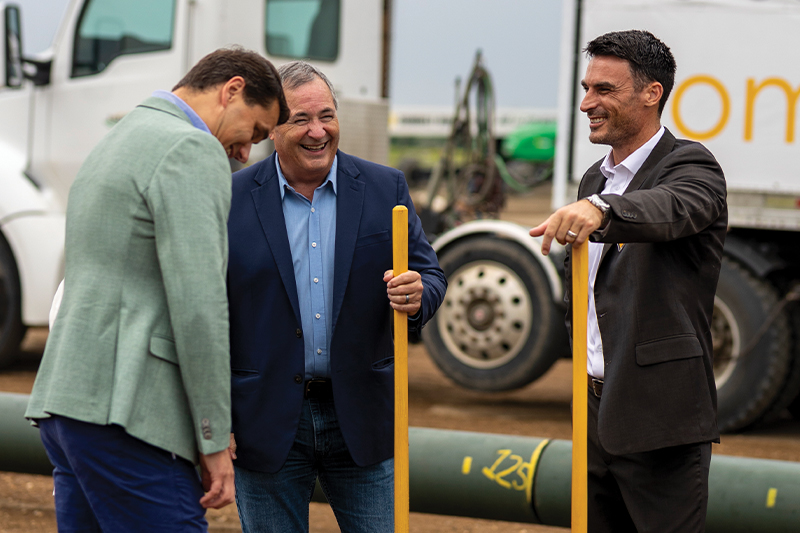
The power of place
In the fall of 2025, Ruben Devos packed up his life in Belgium, including his wife and two little girls, and flew across the ocean to North Dakota. As Agristo’s project director for Grand Forks, he would need to oversee development of the facility from the ground. The Devos family survived their first Grand Forks winter and have come to enjoy their new environment. “The community is really nice to us,” he said as his girls bounded into the event tent. “They’re helping us out with everything, and we feel really welcomed.”
Since it’s their first time in the U.S. – for both the Devos family and Agristo itself – a lot of learning is underway. Devos noted that there’s been an “open atmosphere” from the earliest project discussions with Grand Forks stakeholders.
“Together, we find the right solutions. And it’s on the side of construction, it’s on the side of utilities, and with the city or with the farmers,” he said. “We really feel embraced by the community, and that really helps forward the project.”
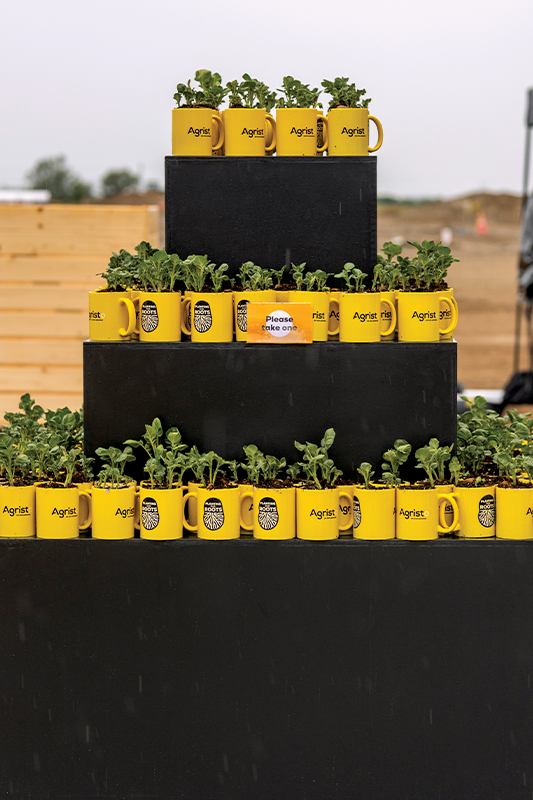
Minnkota Power Cooperative was a collaborative partner for Agristo throughout the site selection and development process. Minnkota’s Economic Development staff worked with other project partners to communicate the importance of the Agristo facility and help demonstrate why local incentives and state investment would be critical to the project's success.
“Just as importantly, we spent time listening,” said Minnkota Economic Development Administrator Melissa Beach. “Conversations with growers and project partners helped us better understand what would be needed not just to land the project, but to support it over the long term for both the company and growers.”
At the Agristo facility, uninterrupted power from Nodak Electric Cooperative will be critical to the production of French fries and other frozen potatoes. “If we do not have power, we cannot cool our product,” Devos said. “Also, we are producing seven days a week, 24 hours a day, so reliable power is in fact one of the major elements we are looking for when we're looking for sites.”
Now that the facility is solidly planted in the heart of Minnkota’s service territory, the impacts of the Agristo investment will root throughout the cooperative region. Many growers who receive electricity from Minnkota member cooperatives like Nodak Electric, PKM Electric and Red River Valley Cooperative Power are planning investments in expanded potato storage and additional acreage to meet future Agristo demand.
Beach added that from an economic development perspective, value-added agriculture creates one of the strongest multiplier effects of any industry.
“Every dollar invested in processing generates additional demand for local growers, transportation, construction, equipment suppliers, utilities, professional services and a wide range of supporting businesses,” she said. “Agristo will strengthen farm profitability while creating long-term manufacturing jobs and expanding the regional tax base.”
On the grow
But first, Agristo must build. The company has already invested $100 million in ground improvements at the construction site. Development will continue until 2029, when the first potatoes are expected to make their way through the facility. Those potatoes will be turned into various potato products, including private-label goods for big brands like Walmart.
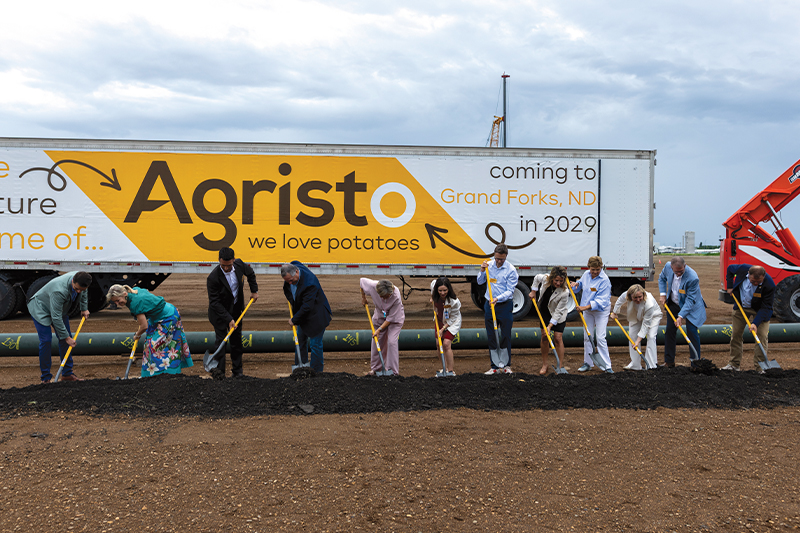
At the July 7 celebration, project leaders grabbed shovels for a new take on a groundbreaking, tossing seed potatoes into the soil and covering them with Red River Valley earth. Cheers erupted from those standing by – the dreamers, planners, connectors and growers who made it all possible.
“It's really milestone by milestone. It all has something special,” Devos said. “When we have the first potatoes arriving, the first fries, those moments will be very, I think, even emotional, because it’s the work of four years to get to that moment.”
When that moment comes, Loyland says he may be ready to pull his last potato and hand the farm over to his son. Retirement comes for everyone. However, with the relationships and trust he’s built with his new Agristo family, he knows his legacy is in good, dirt-covered hands.
“Things will change, and we don’t know what that looks like yet,” he said, acres of potato flowers blooming behind him. “But from all the interaction and all the time that the company has spent with us over the last four years, we have a lot of confidence that they mean what they say.”
MAIN IMAGE: Mike Loyland, a multigenerational farmer in Thompson, North Dakota, walks rows of potato plants in early July.
...

5301 32nd Avenue South
Grand Forks, ND 58201
P: 701-795-4000
