

Welcome to Pembina Gorge(ous) State Park
Cavalier Rural Electric Cooperative is powering North Dakota’s newest state park.
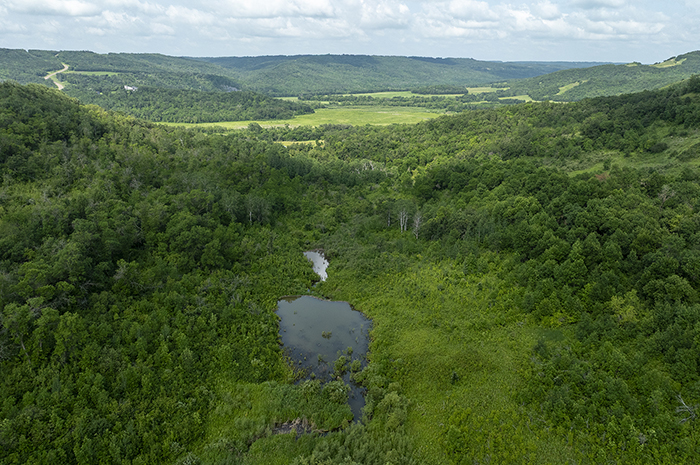
It’s common to observe a level of shock in first-time visitors to the Pembina Gorge area of northeast North Dakota, just south of the Canadian border. A gasp sneaks out when people expect flat farmland but instead bear witness to thousands of acres of rolling river valley, carved steeply by flowing water and overgrown with lush woodland.
Getting guests to engage with the jaw-dropping terrain was one of Mike Duerre’s first goals when he joined North Dakota Parks and Recreation in 2007. He was hired to oversee Pembina Gorge State Recreation Area (and later the nearby Icelandic State Park) and, although he didn’t have a set plan, he knew developing the area’s off-highway vehicle (OHV) trail system was a place to start.
“I've always said if you're going more than seven miles an hour, you're going too fast, because there's just so much to see,” he said. “There are beautiful views. Up on top on the Trappers Ridge Trail, you're overlooking the entire gorge. It's just … it’s gorgeous.”
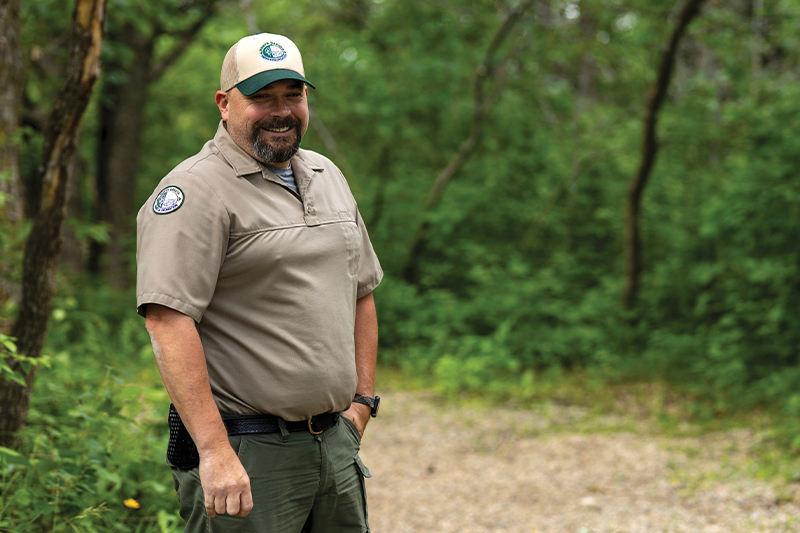
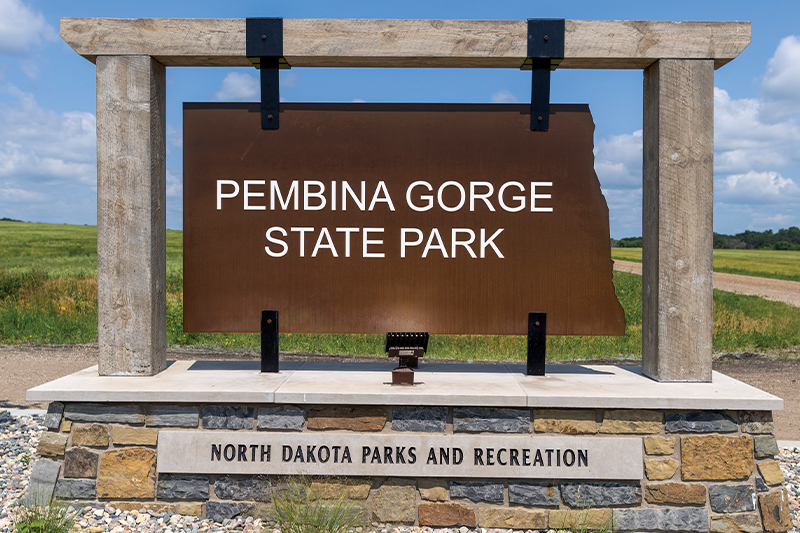
Now, nearly two decades and several trails later, Duerre and his team are celebrating a milestone of even grander scale. This June, Pembina Gorge State Recreation Area became North Dakota’s newest state park – now known as Pembina Gorge State Park. North Dakota hadn’t opened a new state park since 1989, when it introduced Cross Ranch State Park in the central part of the state near Washburn.
“I went to Cross Ranch State Park when it was new, and I was in the fifth grade, so it’s exciting to be a part of this,” Duerre said. “Taking this job was such an opportunity, because I was young and no idea what it would lead to. Getting to this point now and seeing it turn into a state park – it’s pretty cool.”
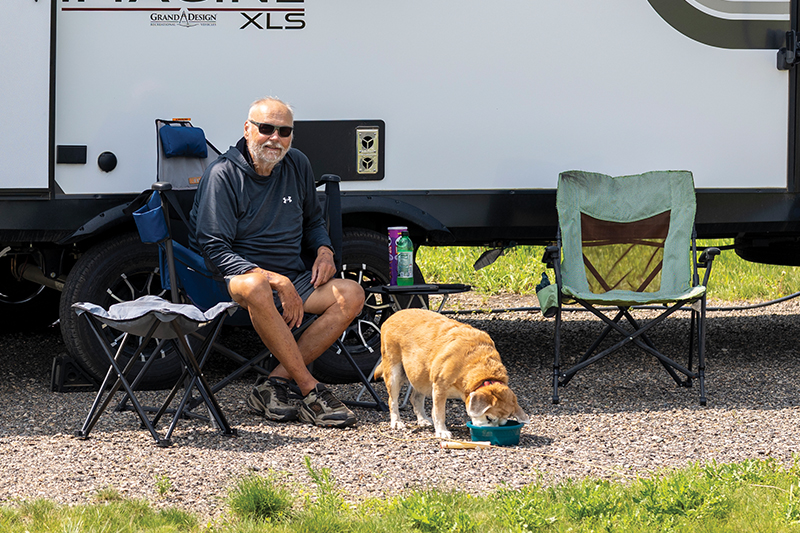
To mark its elevation to a state park, Pembina Gorge State Park now offers a full campground with more than 50 modern and primitive campsites. Later this fall, a comfort station with showers and bathrooms will be added. Over time, the park plans to build five family cabins, a visitors’ center and other guest amenities as funding opportunities allow.
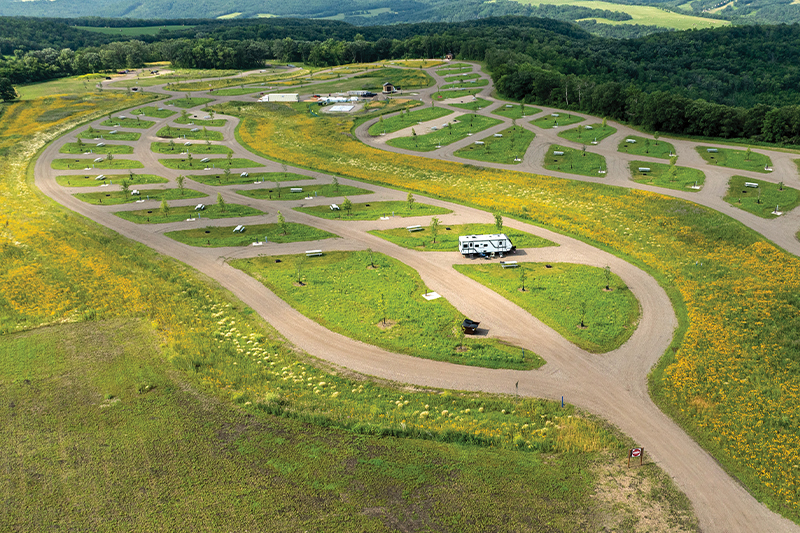
Although the campground looks like it appeared effortlessly, with native grasses, wildflowers and forest hugging the site, it took a lot of work and determination to get to opening day. And the work will continue.
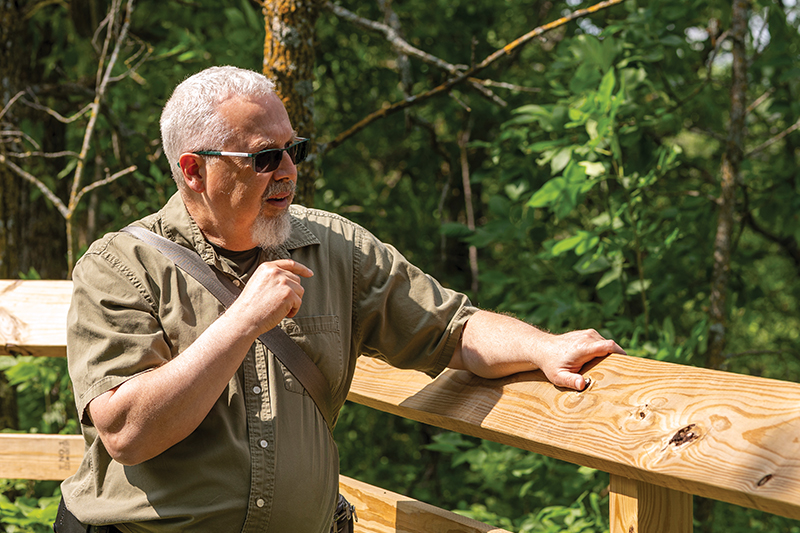
“When an architect builds a building, you go in for the grand opening and that's the best it’s ever going to look. After that, it slowly deteriorates,” noted Paul Taylor, deputy director of North Dakota Parks and Recreation. “But with a landscape or a park, it's the opposite. It’s not something that rolls off the back of a truck. You put certain things in place and then it grows. It's like a big garden, and this is the gardener,” he added, nodding to Duerre.
The journey to state park
In his first couple of years with Pembina Gorge State Recreation Area, Duerre spent a lot of his time getting a lay of the land. Literally. The area was a checkerboard of public and private lands, making the development of a clear OHV trail system challenging. But the trails were needed. Use of OHVs was growing to the point where public lands were becoming inundated, and drivers needed an avenue to explore.
“Nowhere else in the state was allowing for that. So, we considered how we could build that up so that people can use it, while taking away that burden from the landowners,” Duerre explained. “We wanted to do it in a way that we could conserve the public lands and make sure they're being managed to the intention for which they were purchased.”
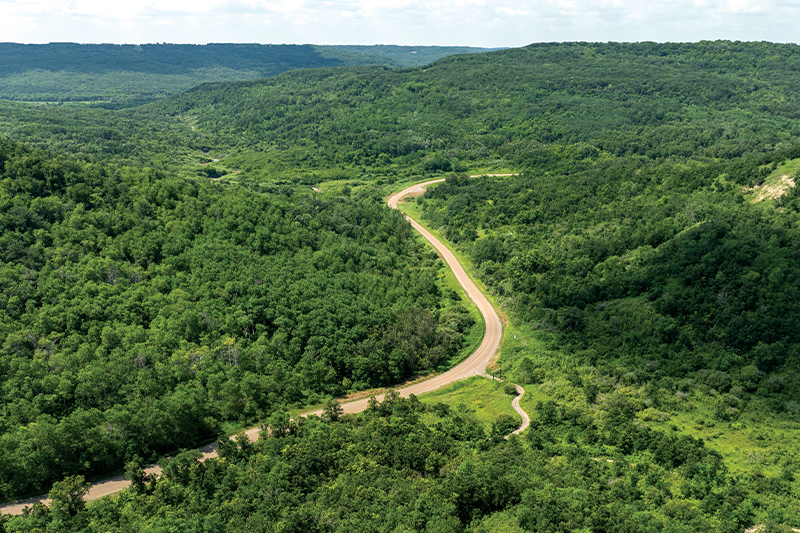
Through a number of conversations and partnerships, Parks and Recreation was able to map out a strong system of trails through the steep terrain of the Pembina Gorge. By 2010, they had their land base established and applied for a state Recreation Trails Program grant. That funded their first section, including the popular Three Sisters Trail and Trappers Ridge Trail, which opened in 2012.
For the next three years, the Pembina Gorge team opened new trails annually for use by not only OHVs, but bikers, hikers and horses, too. The trails were a success, but Duerre knew there was more to be done.
The state legislature funded a master plan for the recreation area in 2013, which proved to be a nine-month undertaking.
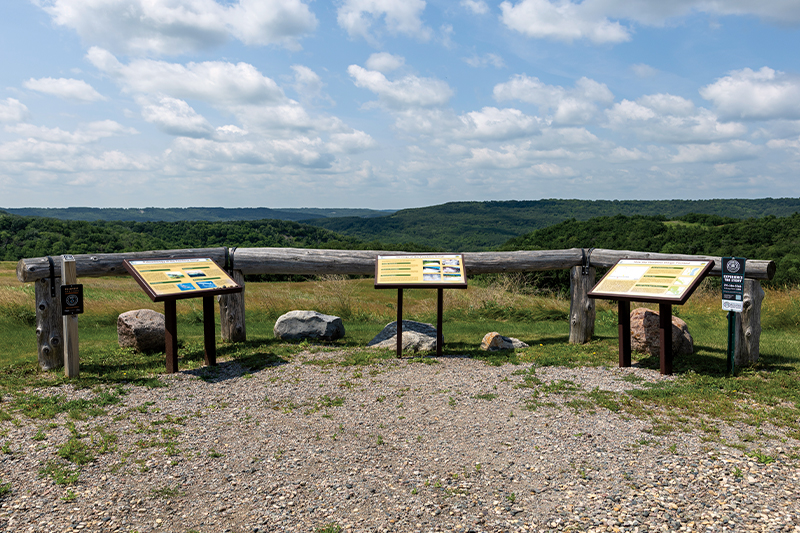
“We did a lot of public surveys and a lot of stakeholder meetings, and we gathered input to put together the next steps for what the public wanted. Landowners, business owners – we gathered everybody for that conversation,” Duerre said.
In that master plan, the group laid out a 17-item list of their next priorities. One of those was a campground. “We put our sights on that and said, now we need to figure out where to build a campground,” he continued. “In a river gorge, all our land is very rough and steep. How do you do that?”
Things began to fall into place. They purchased a piece of land for the campground in 2018, but still needed funding to build the campground. Their opportunity came in the 2023 legislative session. State lawmakers funded $6 million for campground development, and Parks and Recreation leveraged those state funds to pull in an additional $2 million federal Land and Water Conservation Fund grant.
The next three years were a flurry of ideas, design and construction. In spring of 2026, when planning and development ended and operations began, North Dakota welcomed its newest state park.
Powering the park
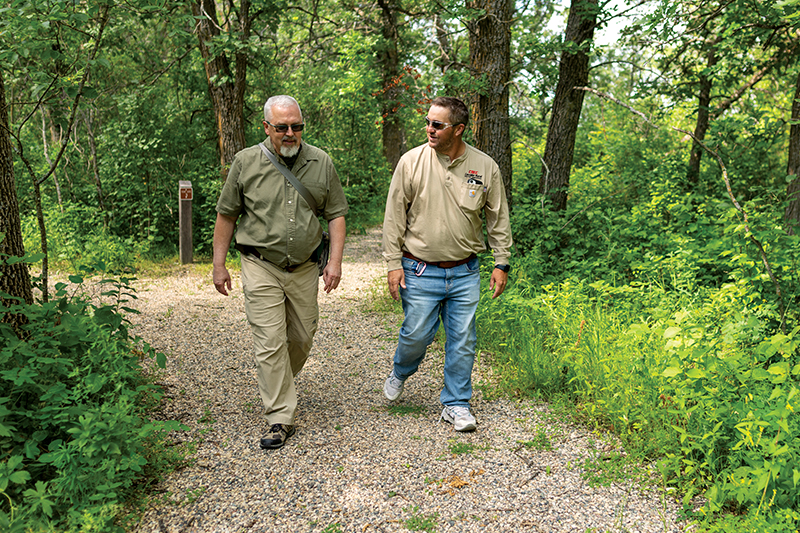
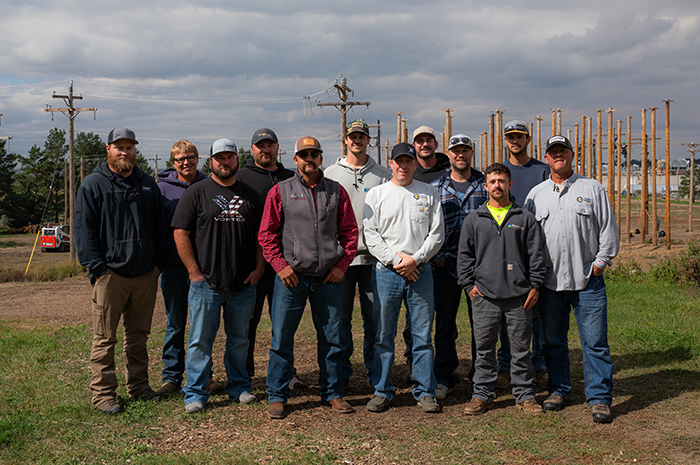
Marty Tetrault, general manager of Cavalier Rural Electric Cooperative (CREC), has lived his entire life with the Pembina Gorge in his backyard. He recalls memories of hitting the trails with friends and responding to tricky lineworker calls on the valley’s steep sides. When it came time to power the new state park, he was happy to help.
“I love to see it evolve up here in our area, especially with the OHV trails and now the campground,” Tetrault said. “It just ties whole Pembina Gorge region together and creates an opportunity for people to come and visit.”
The CREC crew examined a few different options to run electricity to the campground. After working with landowners and obtaining easements, they found a pathway for underground primary cable along the east side of the campground. The original plan had the line cutting across the park, but after some conversations with the campground’s contracted electricians, Tetrault recommended the line stay on the outskirts to allow flexibility for park expansion.
“That was a really great example of being adaptable and open to ideas through the process,” Taylor said. “It was just a great call for just that reason. As we’re thinking about the future, and not knowing exactly what is going to happen, we don’t want to create impediments to growth.”
The growth of the state park will also tee up the surrounding region for growth. By creating another place for people to stay, the campground can keep people in the area longer. Those visitors can spend more money at gas stations and restaurants in nearby Walhalla, hit the links at the Walhalla Country Club, or spend time at the beautiful Frost Fire Park just down the road. The state park’s future cabins will create a four-season opportunity for visitors, creating an even stronger economic impact.
“It’s been great to be able to work North Dakota and Parks and Recreation,” Tetrault said. “Mike [Duerre] has been an electric member of ours for a long time, so I got to know Mike when he first moved out here. One of our members had a dream, and we get to see it become reality.”
As Duerre prepares for the busy fall season in the Pembina Gorge – the autumn color change is not to be missed – he’s reminding himself to take a step back and truly appreciate the opportunity he and his collaborators have built not only for North Dakotans, but for those who travel far from home to see what his corner of the world has to offer.
“We’re about 60 years old as an agency,” he said of North Dakota Parks and Recreation. “In those 60-some years, I think we've been very successful in creating memories and living our mission: Connecting People and Places.”
MAIN IMAGE: An aerial view shows the vast reach of North Dakota's Pembina Gorge. (Minnkota/Michael Hoeft)
...

5301 32nd Avenue South
Grand Forks, ND 58201
P: 701-795-4000
