

Feeling the crunch
Minnkota’s Young Station team has navigated yet another complex project schedule during the 2025 Unit 2 planned outage.
Hidden beneath the footprint of the Milton R. Young Station near Center, North Dakota, is a multi-ton piece of equipment that tour groups rarely see. Not because it’s not important. In fact, the Unit 2 primary crusher is one of the most crucial elements of the coal-based power plant process of electric generation.
It’s just a lot of stairs into the Earth to get to it – a journey Minnkota Plant Engineer Sam Schwanberg got used to as he facilitated the complicated work of replacing it.
“This has been my life for the last three months,” he said at the base of multiple levels of steps. “Here is the new crusher. We still have a little bit of work to do on it, but at this point it’s about 90% complete.”
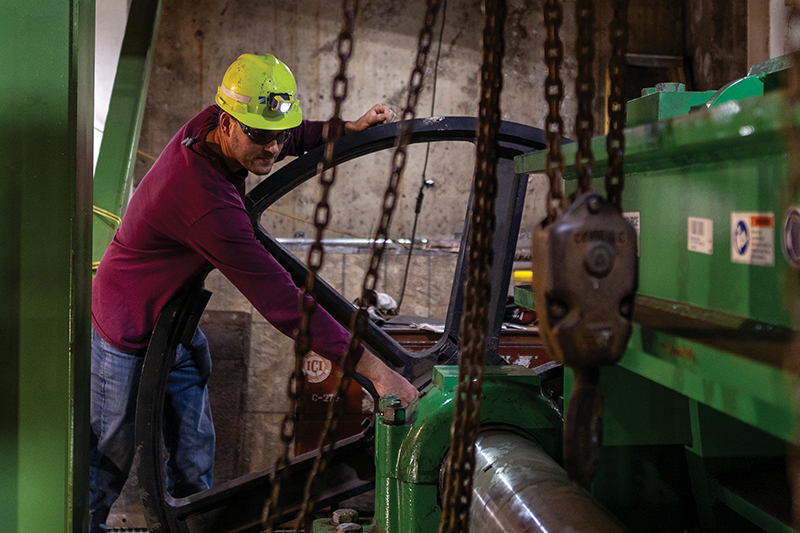
Schwanberg’s primary crusher and feeder replacement project was one of several major undertakings on the docket for the Unit 2 planned maintenance outage, which occurs every three years at the Young Station. During the weekslong outage, the generating unit is taken offline for thorough inspection, maintenance and repairs, while its Unit 1 counterpart continues to provide power for the Minnkota membership. The triennial outage cycle ensures the plant remains reliable, efficient and up to date with the latest technology.
In the case of the primary crusher, Minnkota’s engineers knew that an updated design would prevent a lot of repair headaches (and extra costs) down the road.
“The old crusher had a sharper tooth design to it. Those teeth would break off when you put rocks through it, and that was a ton of work for us to maintain,” Schwanberg explained. “This new crusher is more of a blunt tooth design and is more equipped to handle rocks specifically. We don’t want to crush the rocks, but we want to be able to pass them through and retrieve them before they reach our secondary crushers. The old crusher did not have that capability.”
Outage-time hustle
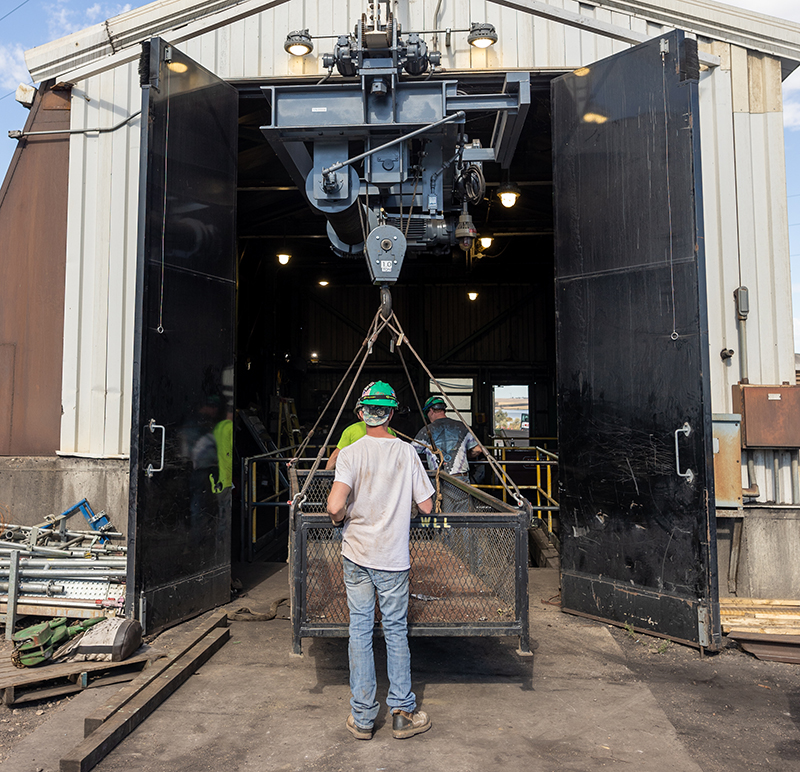
As Schwanberg and his team focused on their below-ground goals, the rest of the plant hummed with the daily activity of nearly 400 contractors and 100 Minnkota employees, all working extended hours to finish dozens of projects within the outage timeframe. The timeline was driven by three large “critical path projects,” project management lingo used to describe the longest tasks within the outage. The primary crusher replacement was one such project, along with replacing Unit 2’s protective relay system and several air heater modules.
“Those are probably the top three projects for this outage, but there’s so much more going on,” said Tim Michlitsch, Minnkota Plant Manager of Engineering & Reliability. “The other items just happen to be smaller in scale or perhaps won’t delay a startup if we don’t get it done by the end date. For example, we can’t operate without the air heater, so we don’t have the option to finish it later.”
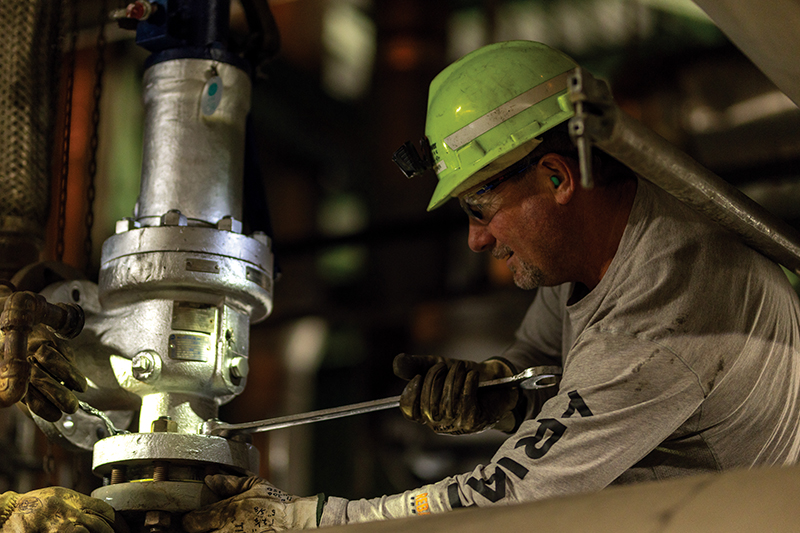
The 2025 outage was also an opportunity to open up the massive Unit 2 turbine. This centerpiece equipment, which is responsible for the generation of electricity, is inspected during major outages every three years, with its major components having nine-year inspection intervals. This year, the high- and intermediate-pressure rotors were inspected. In three years, the low-pressure rotors will get a look, and the generator itself will be inspected three years later.
“We don’t really know what we’re going to find, because it’s covered by several layers of casing,” Michlitsch said of the rotors inspected this year, which showed some erosion on the blades that would need repair. “That’s an example of a discoverable that there’s really no way we could have had on the books as a repair without taking this time for the outage.”
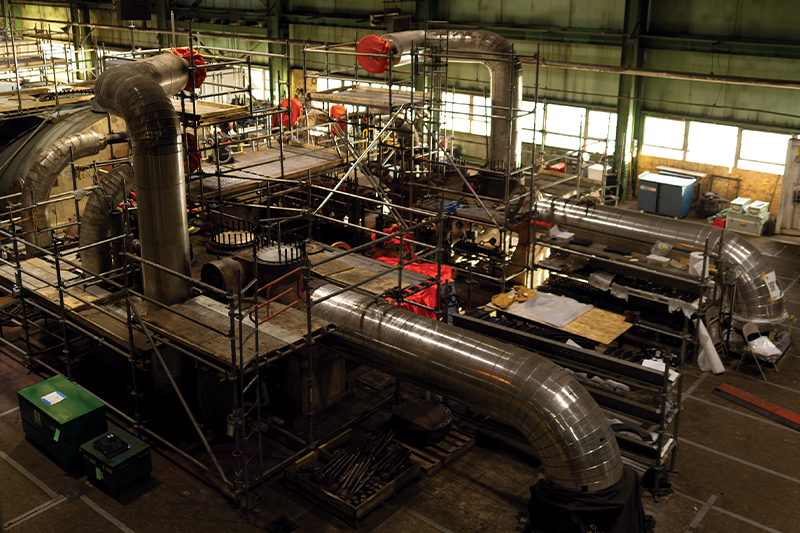
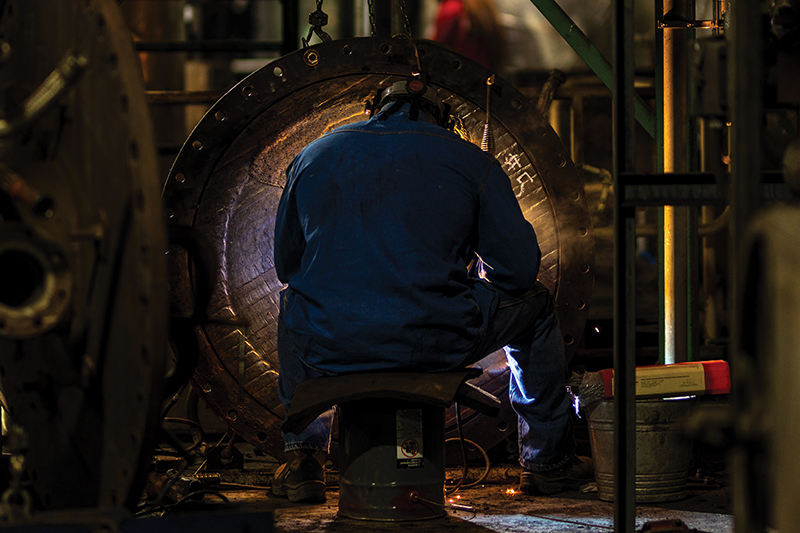
Minnkota’s maintenance coordinators and project leaders ran into their share of typical challenges during the Unit 2 outage, managing newly discovered work and supply chain speedbumps. However, as happens with every Young Station outage, crews and contractors remained adaptable at every turn.
“Every day during the morning 9 a.m. meeting, I get to witness teamwork at its finest,” said Neil Kramar, Minnkota Plant Manager of Operations & Maintenance. “On the project manager level, it’s difficult to talk in front of a group of 40 others and have the courage to say your project is falling off pace and you may need help, or we will be looking at a schedule push. I observe true leadership when others step in and offer resources and time to help them understand their barriers and get back on track.”
Ultimately, Unit 2 was delayed in coming back online due to unforeseen hurdles. But the teamwork Kramar spoke of helped to minimize the impacts of the outage extension.
Under pressure
Schwanberg has been an engineer at the Young Station for six years, and 2025 marked his fourth major planned outage. Although he’s one of the younger engineers, he’s already taken the helm of two major capital projects. This year’s primary crusher and feeder project was not only the largest venture of the outage, it was the most involved, requiring the coordination of a team of scaffold builders, electricians, millwrights, pipe fitters and iron workers.
On top of that, Schwanberg took over the project from another engineer late in the nearly two-year planning process, so he had to work even harder to wrap his arms around the complexity of the job.
“It’s kind of scary, to be honest, but I have a huge supporting team helping me,” he said, contractors buzzing around him. “All the planners, electricians, foremen out here, the contractors, superintendents: We’re all in it together. We all want the same thing.”
“Sam has just moved right through the workload and stayed positive, and he’s done a great job,” Michlitsch said. “If you have a team member or a team leader that’s staying positive, I think it really helps keep everybody else going in the right direction.”
For the Young Station, a maintenance outage is an opportunity to observe and strengthen the many individual pieces of equipment that work together to supply power to the region. But more than that, outages are an opportunity to observe and strengthen the young leaders and teammates who will serve as the plant’s keepers for years to come.
“My proudest moments are when I see the smiles return to the faces of the employees when we realize the unit is finally up and running again,” Kramar said. “Each individual had their own unique circumstances where they contributed to the overall success.”
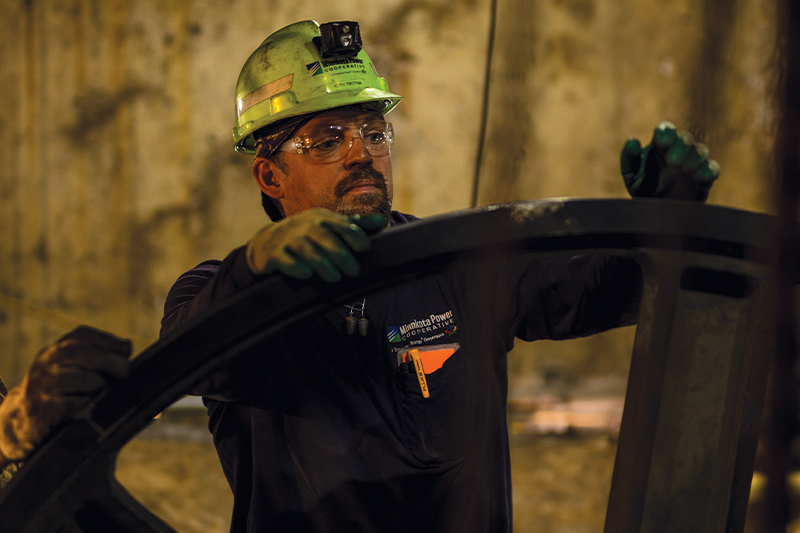
MAIN IMAGE: Minnkota Plant Engineer Sam Schwanberg inspects the track of a new coal feeder system, one of many key upgrades completed during the Unit 2 maintenance outage. (Minnkota/Michael Hoeft)
...

5301 32nd Avenue South
Grand Forks, ND 58201
P: 701-795-4000
